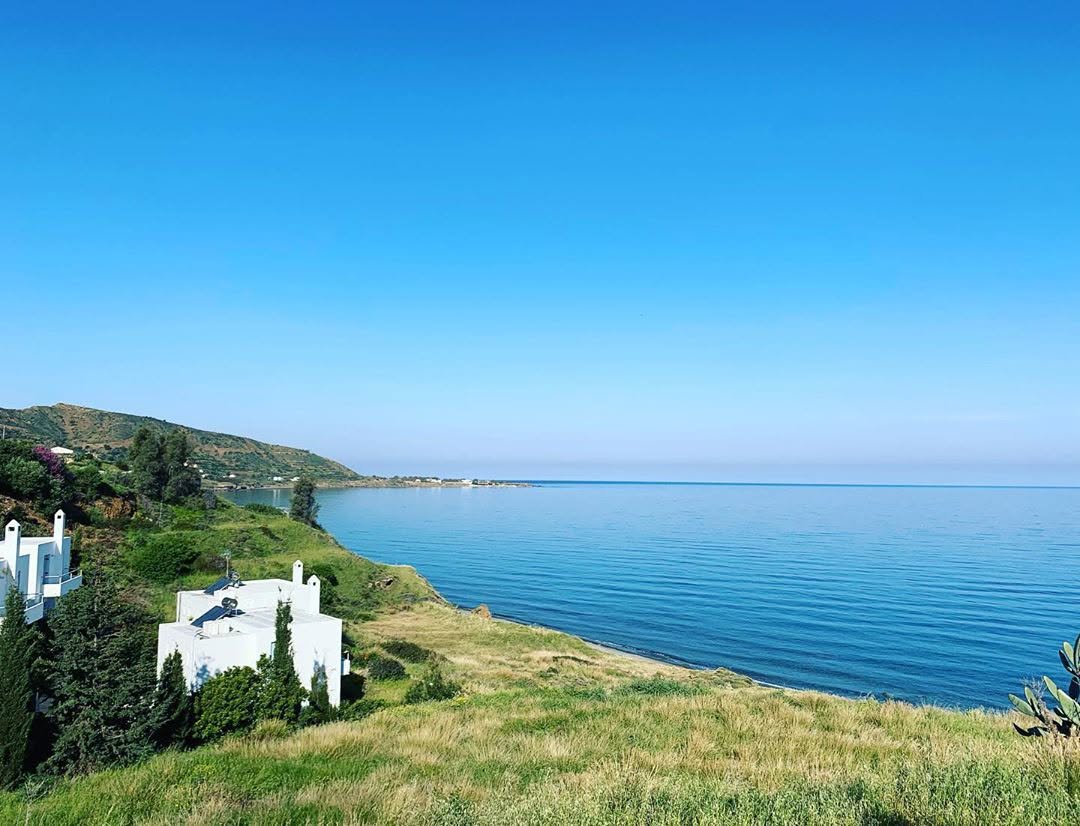
Pachyammos is a small village on the northwest coast of Cyprus, in the Tillyria region, a few minutes past Pomos and just west of the Kokkina exclave. It is the last village on this stretch of coast road, which tells you most of what you need to know about the pace of a holiday here. There are no resort strips, no queues for a sunbed and no traffic to speak of.
What there is instead: open sea, pine covered mountains rising almost straight out of the water, one of the most visited churches in Cyprus, and a coastline that most visitors to the island never see. If you are staying in one of our villas in Pachyammos, you are within about half an hour of Polis Chrysochous and within striking distance of the Akamas Peninsula, while still coming home each evening to somewhere genuinely quiet.
Here are ten things to do in Pachyammos and the surrounding area.
1. Spend a slow morning on Pachyammos Beach
The village beach is long and open, backed by tamarisk trees and fields rather than apartment blocks. The sand is soft with only a scattering of rocks, and the shoreline is narrow rather than sprawling, which is part of why it stays so quiet.
Mornings are the best time to swim. The sea here is usually calm and glassy before the afternoon breeze picks up, and on a windy day the waves can build quickly. From the water you get a clear view back to the village, the hills behind it and the bell tower of the Agios Raphael church.
Facilities are minimal. We would not count on sunbeds or umbrellas being available, so bring your own shade, water and anything else you need for the day. There is no lifeguard service, so keep an eye on children and on the sea state.
2. Visit the Church of Agios Raphael
The Agios Raphael church stands in the centre of the village at the foot of Lorovounos, and it is the reason a great many Cypriots make the drive to Pachyammos every year.
The church was built following a healing that a local resident, Neophytos Socratous, attributed to Saint Raphael in 1987. It is built in Byzantine style, with a carved wooden icon screen and an interior painted throughout with hagiographies. The courtyard looks out over the coastline, and there is a war memorial in the grounds recalling the fighting that took place in this area in 1964.
Thousands of pilgrims visit each year, and the feast of Saint Raphael falls two days after Orthodox Easter, when the village fills up. Visitors are welcome at other times too, but people come here to pray rather than to sightsee, so dress modestly and keep voices down. There is also a small chapel near the beach, worth a look on your way past.
3. Find the Dragon’s Cave at Pomos
A few minutes down the coast at Pomos, a sea cave sits beneath the cliff with an opening towards the water and a thin run of fresh water passing through it. Two large flat rocks sit at the entrance. Local legend says they are a dragon and a dracaena who guarded the coast from pirates and were turned to stone.
There is a small parking area and a short path down to the viewpoint and the little bay. The rocks and steps get slippery, and after a storm the swell can be strong, so take your time. Late afternoon and sunset are the best hours for photographs and the most comfortable for the walk down.
4. Eat fresh fish at Pomos harbour
Pomos fishing harbour is a genuinely small working harbour, with a handful of boats and tavernas looking out over the water. It is the obvious choice for an evening out from Pachyammos: a plate of whatever came in that day, a bottle of something cold and the sun going down over Chrysochou Bay.
The one we send guests to is Kanalli Fish Tavern, a family run place that has been a fixture in Pomos for decades. It sits above the harbour with a clear view over the water, serves breakfast through to dinner, and you can book a table on their website. Portions in this part of the island tend to be generous and service unhurried, so give the evening more time than you would at home. If you want a table on a Friday or Saturday in August, call ahead.
5. Get on the water
The coastline between Pomos and Pachyammos is made up of small coves, clear water and rocky ledges, which makes it good for snorkelling and for kayaking or paddleboarding. Paddling out to the Dragon’s Cave from Pomos is a popular half day if the sea is behaving.
As with swimming, go early. The water is usually flat in the morning and choppier by mid afternoon. Bring your own kayak, board and snorkel gear if you want to get out on the water, as there is nothing to hire locally and none of our villas supply it.
6. Drive up to Stavros tis Psokas and look for mouflon
Behind Pachyammos lies the Paphos Forest, one of the largest unbroken wild areas in Cyprus. At its heart, at around 900 metres, is the Stavros tis Psokas forest station, run by the Department of Forests.
The main draw is the fenced enclosure where you can see the Cyprus mouflon, the wild sheep found nowhere else in the world and the closest thing the island has to a national animal. They are shy and most active in the cooler hours, so early morning or late afternoon gives you the best chance. There are two waymarked nature trails from the station, Chorteri and Selladi tou Stavrou, plus a shaded picnic site among the pines.
The roads up are narrow and winding, and petrol stations are scarce once you leave the coast, so fill up before you set off and allow more time than the distance suggests.
7. Take the mountain road to Kato Pyrgos
Pachyammos is effectively where the coast road stops. To carry on east to Kato Pyrgos you have to turn inland and loop around the Kokkina exclave, which turns a short hop along the shore into roughly 23 kilometres of serpentine mountain road past fences, guard posts and UN positions.
It is a memorable drive, and Kato Pyrgos at the end of it is a quiet coastal town that fills up with Cypriot families in August and empties again the rest of the year. A Green Line crossing point opened near Kato Pyrgos in 2010, linking the town more directly with Nicosia.
If you are cycling rather than driving, the Polis to Pyrgos coastal cycling route runs roughly 46 kilometres along the shore and passes through Pomos.
8. Cruise to the Blue Lagoon from Latchi
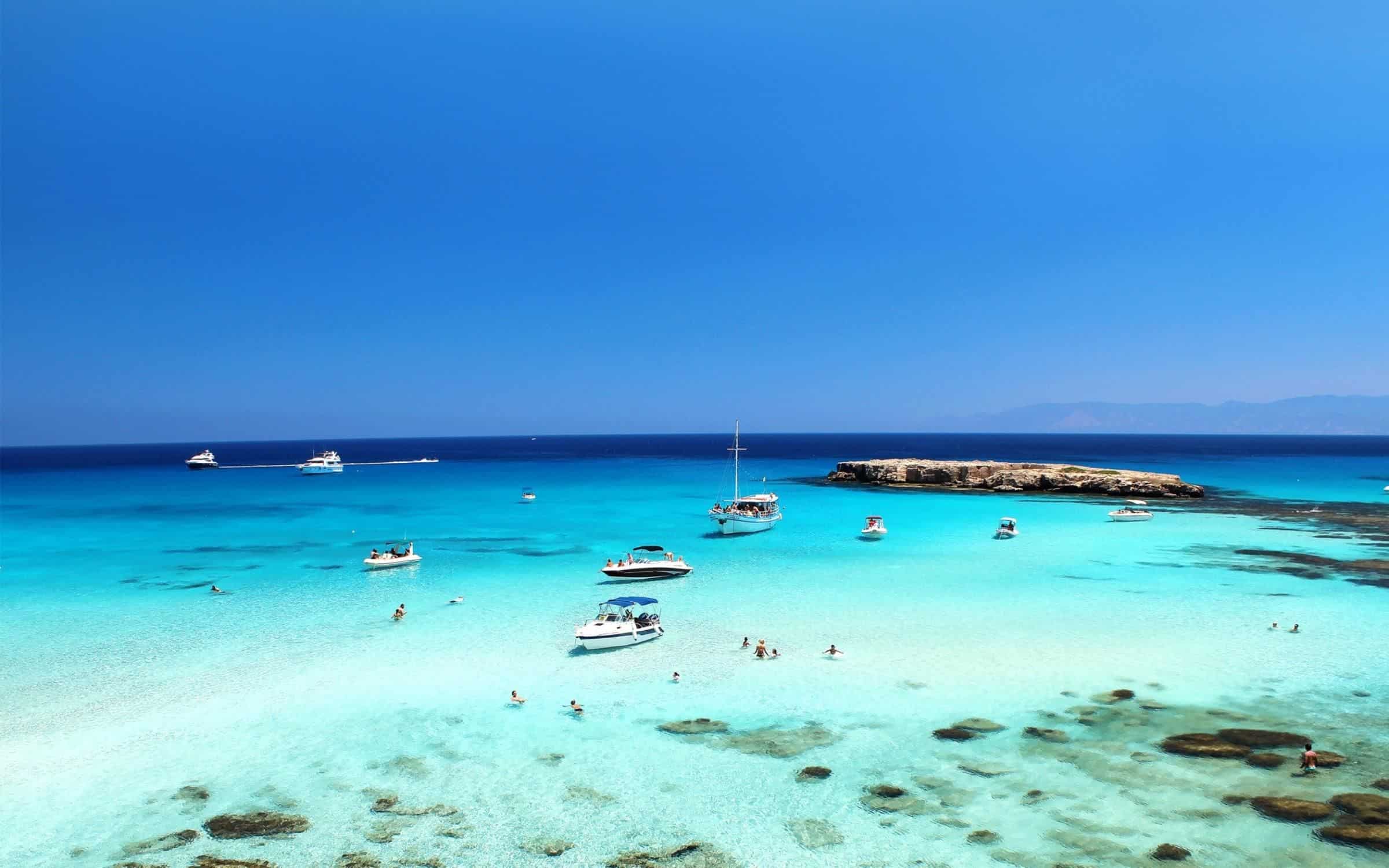
Latchi harbour, west of Polis, is the departure point for boat trips along the Akamas Peninsula to the Blue Lagoon. Most cruises run past the Baths of Aphrodite, the sea caves at Manolis Bay and Saint George’s Island before anchoring at the lagoon for an hour or so of swimming and snorkelling.
You can choose a large glass bottom boat, a smaller guided cruise or a self drive boat that needs no licence. In July and August these fill up, so book a day or two ahead. Latchi itself is worth arriving early for, with a row of fish tavernas along the harbour front.
9. Walk the Akamas from the Baths of Aphrodite
At the end of the road past Latchi, the Baths of Aphrodite marks the start of the Akamas trails. The site itself is a small natural grotto and pool shaded by a fig tree, tied to the legend of Aphrodite and Adonis, and there is a botanical garden around it.
From here the Aphrodite and Adonis trails climb into the peninsula, with long views back across Chrysochou Bay. Start early in summer, take more water than you think you need and wear proper shoes. In spring the wildflowers along these paths are the best reason of all to visit the northwest.
10. Make a day of Polis Chrysochous, Gialia and Argaka
Polis Chrysochous is the nearest proper town, built on the site of the ancient city kingdom of Marion, later rebuilt as Arsinoe. Its pedestrianised square is the place to sit with a coffee, and it is where you will find supermarkets, a pharmacy and a bank if you need them during your stay.
On the way back, the villages of Argaka and Gialia are worth a stop. Above Gialia sit the ruins of a medieval Georgian Orthodox monastery dedicated to the Virgin Mary, a reminder of how far the connections of this quiet corner once reached. The beaches along this stretch are long, empty and easy to pull off the road for.
If you want a bigger day out, the signposted circular route from Polis through Pomos, Pachyammos, Kato Pyrgos, Cedar Valley and Stavros tis Psokas runs around 162 kilometres and takes the best part of four hours of driving, plus stops. Start with a full tank.
Where to stay in Pachyammos
We look after five two bedroom villas in Pachyammos, all of them with beach access and all within easy reach of the church and the coast road down to Pomos.
- Villa Omega, a quiet coastal stay with sea views
- Villa Astrofegia, a cosy two bedroom with sea views
- Villa Akroyiali, seafront and about as close to the water as it gets
- Villa Lara, the one with a private pool
- Villa Paradise, coastal calm with panoramic sea views
Villa Lara is the only one of the five with a private pool. The rest are for people whose swimming happens in the sea, which given how close the water is, is no hardship.
A little further down the coast we also look after Pomos Villa, a secluded seafront house with its own stretch of beach, worth a look if you want the same coastline with a bit more space.
You can see all of them together on our Pachyammos destination page.
A car is essential in this part of Cyprus. Almost everything above is a drive rather than a walk, and there is no meaningful bus service outside the main coastal route.
When to visit Pachyammos
Spring, March to May. The best months for walking, wildflowers and the Akamas trails, with the sea still cool for swimming.
Summer, June to August. Hot, dry and busiest in August when Cypriot families take their holidays. Mornings in the sea, the hottest hours in the shade, evenings at the harbour.
Autumn, September to October. Warm sea, thinner crowds and comfortable walking weather. For many people this is the best compromise of the year.
Winter, November to February. Quiet and green, with the mountains behind the village at their most dramatic. Good for a working stay or a walking holiday rather than a beach one.