Peristerona is a hillside village in the Paphos district, south of Polis Chrysochous, sitting at an average altitude of around 410 metres. That height is the first thing you notice. The air is cooler than on the coast, the views open out across the hills, and the pace of the day slows down to match the village around you.
The name comes from pigeons. Peristeri is the Greek word for them and a peristeronas is a dovecote, and the birds once nested in their thousands in the cliffs of the gorge just outside the village. Those cliffs are the second thing you notice, and they are the reason most people make the drive up here.
This is farming country: vineyards, citrus, olives, and a good number of residents who work for the forest department looking after the Paphos state forest. If you are staying in one of our homes in Peristerona, you have the sea at Polis within easy reach and most of what is worth seeing in the west of the island inside a comfortable morning’s drive.
Here are ten things to do in and around Peristerona village.
1. Walk out to the Eagle Nest Gorge
The Eagle Nest Gorge, known in Greek as Aetofolies, opens up on the western side of the village and it is the reason Peristerona appears on any map at all. It is a deep, quiet ravine, and the viewpoint at Kapsalia sits at almost 700 metres with the whole length of the path unfolding below.
There is a picnic site at the top with a water supply, along with a monument to the fighters of the 1955 to 1959 struggle. Three hiding places were built into the slopes here, used by the squad of Evagoras Pallikaridis, and the caves that laced the gorge made it one of the better places on the island to stay out of sight.
Vultures once nested in these cliffs in large numbers and their numbers have fallen sharply, but the gorge still holds wild pigeons, fruit bats and hares. Bring binoculars and go early, when the light is on the rock face and the heat has not yet arrived.
The site is not well signposted. You reach it by turning off in the village, and it is worth asking at your accommodation for directions before you set out rather than relying on a map application.
2. See the icons at the Byzantine Museum of Arsinoe
At the centre of the village stands the church of Agios Mamas, built in 1911, and beside it the Byzantine Museum of the diocese of Arsinoe, housed in a building you will spot on the way in.
The diocese of Arsinoe is old. It was abolished during Frankish rule, absorbed into the diocese of Paphos, and re-established only in 1996. The museum holds more than sixty icons dating from the thirteenth to the nineteenth century, along with woodcarvings, metalwork, embroidered vestments and manuscripts going back to 1551. There is an olive press in the grounds. The cathedral alongside it holds an icon of Panagia Paramythia dating from around 1500.
Opening hours are not reliably published online, so check locally before you make a special trip.
3. Take the village itself slowly
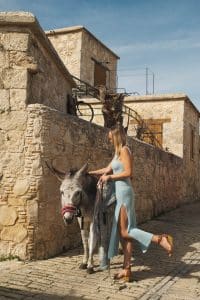
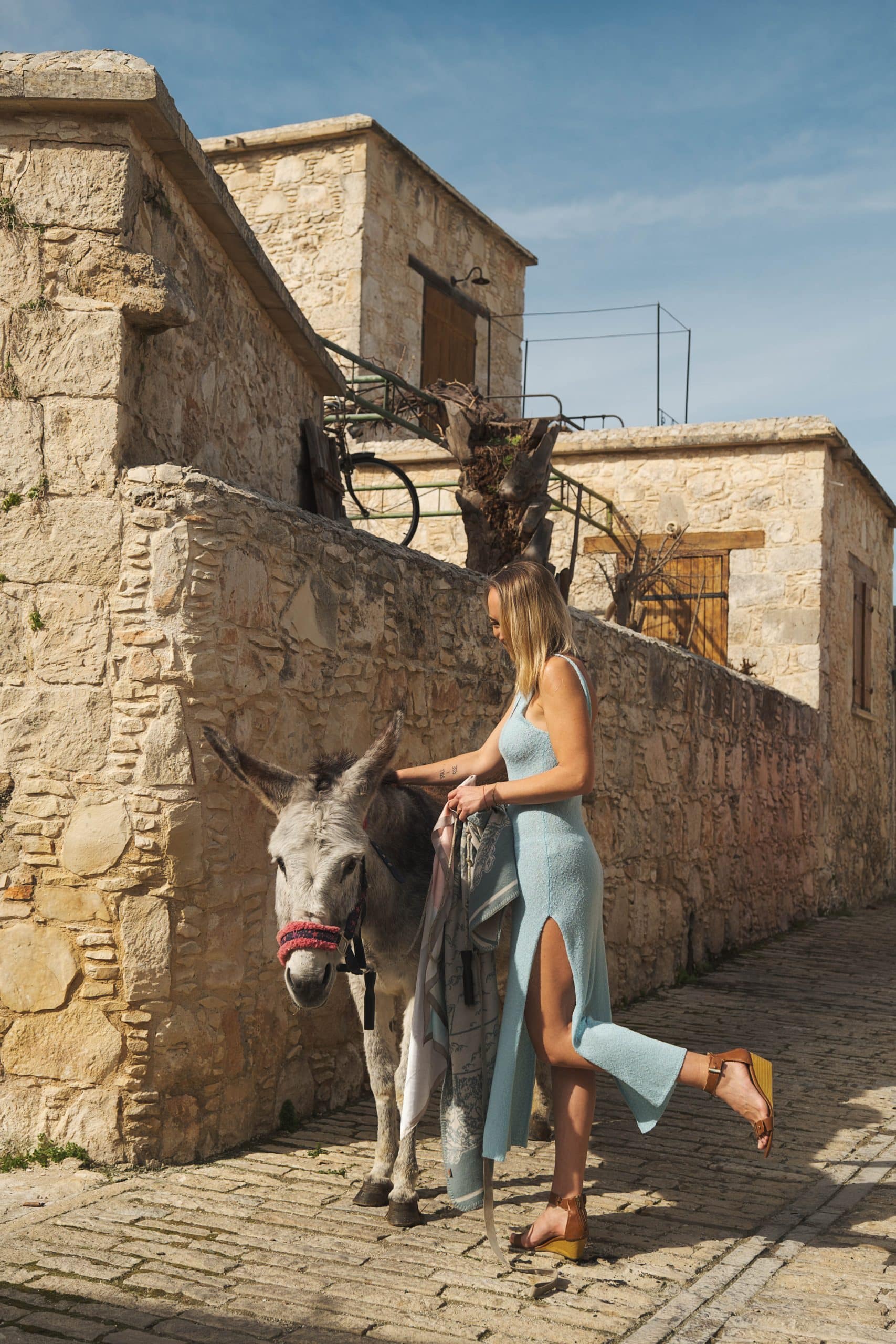
Peristerona is small and it rewards a walk rather than a drive through. The council has spent years encouraging residents to restore the old stone houses rather than replace them, and to build new ones in local stone, which is why the village still looks like itself.
There is a shop for the basics. Beyond that, what there is to do is sit, look at the hills, and watch a working village get on with its day. From December through to April the surrounding countryside produces a remarkable number of wild mushroom species, which is a large part of why some visitors come in winter at all.
4. Spend a morning at Evretou Dam
Evretou Dam is the third largest on the island, set in a landscape of olive groves and open hills. It is a good place for a slow walk along the shoreline, for fishing, and for birdwatching, and it is almost always empty.
On the bank stands the abandoned village of Evretou, a Turkish Cypriot settlement whose residents left in the troubles and which has stood empty since. Part of the old village lies beneath the reservoir. It is a quiet and slightly sombre place, and worth visiting with that in mind rather than as a photo stop.
Nearby is the small medieval Skarfos bridge, one of the Venetian era bridges scattered across this part of the island.Take care parking near the dam wall, where the drop is steeper than it looks.
5. Drive the old road to Lysos and Pelathousa
From Peristerona the old road runs through Lysos and Pelathousa and down to Polis Chrysochous, and it is widely held to be one of the best drives on the island. It is slow, narrow in places and worth every minute.
Peristerona also sits next to Steni, with Meladeia, Trimithousa and Filousa Chrysochous all within a short drive, so you can string several villages together in an afternoon without covering much ground.
6. See the looms at Fyti
Fyti sits high in the hills and has existed since medieval times. It is the weaving centre of the Paphos region, and the hand woven pieces made here are known as fythkiotika, recognisable by the variety of their patterns and the strength of their colours.
The village runs an exhibition of traditional weaving, with a workshop and shop across the road from it, and the pieces are still made on antique looms. The church of Agios Demetrios on the square has a well preserved nineteenth century altar screen, and there are old fountains dotted through the village.
7. Taste Xynisteri in the Laona wine villages
West of Peristerona, the Laona plateau villages sit among some of the best white wine vineyards in Cyprus. Kathikas, at around 655 metres, is the centre of it, with two estate wineries in the village and several eating places on the square. Drouseia, Ineia, Pano and Kato Arodes and the Akourdalia villages are all within easy reach of each other.
The grape to ask for is Xynisteri, the indigenous white variety that does particularly well up here in the sea breeze. If you want a red, ask about Maratheftiko, which is rarer and worth the trouble of finding.
8. Eat fish at Latchi and wander Polis Chrysochous
Polis Chrysochous is the nearest town, down the hill from the village, built on the site of the ancient city kingdom of Marion, later rebuilt as Arsinoe, which is where the diocese in Peristerona takes its name from. Its pedestrianised square is where you will find coffee, supermarkets and a pharmacy.
Latchi, just west of Polis, is a working fishing harbour lined with fish tavernas, and the obvious choice for an evening out from the village.
9. Walk the Akamas and cruise to the Blue Lagoon
Past Latchi the road ends at the Baths of Aphrodite, a small natural grotto shaded by a fig tree, with a botanical garden around it and the start of the Aphrodite and Adonis trails into the Akamas Peninsula. The views back across Chrysochou Bay from the higher sections are the reason to keep climbing.
From Latchi harbour you can take a boat along the same coastline to the Blue Lagoon, passing sea caves and Saint George’s Island, with an hour or so anchored for swimming. In July and August these fill up, so book a day or two ahead.
10. Look for mouflon in the Paphos Forest
Peristerona sits on the edge of the Paphos Forest, and a number of villagers work in it. At its heart, at around 900 metres, the Stavros tis Psokas forest station keeps a fenced enclosure where you can see the Cyprus mouflon, the wild sheep found nowhere else in the world.
They are shy and most active in the cooler hours, so go early or late. Two waymarked nature trails run from the station, Chorteri and Selladi tou Stavrou, and there is a shaded picnic site among the pines. The roads up are narrow and petrol stations are scarce once you leave the coast, so fill the tank first.
From here you can carry on north to the coast, which is worth a day of its own.
Where to stay in Peristerona
We look after two homes in the village itself, both part of The Olive Manor.
- Cottage at The Olive Manor, a restored cottage with a garden setting
- Maisonette at The Olive Manor, a two storey house with garden views
earby we also look after Soumaki Hideaway, a countryside house with a private pool, and Villa Pomegranate over at Peyia, closer to the coast.
You can see all of them on our Peristerona destination page.
A car is essential. There is no useful bus service up here, and everything above is a drive.
When to visit Peristerona
Spring, March to May. The best of it. Wildflowers, green hills, comfortable walking and the gorge at its most alive.
Summer, June to August. The altitude helps, and nights up here are noticeably cooler than on the coast. Walk early, take the afternoons slowly and drive down to the sea when you want it.
Autumn, September to October. Warm sea, thinner crowds and the vineyards at their busiest. A strong all round choice.
Winter, November to February. Quiet, green and cool, with mushrooms in the countryside from December. Good for walkers and for anyone who wants the village entirely to themselves.